
How to Start Exercising When You Have No Motivation: A Realistic Guide
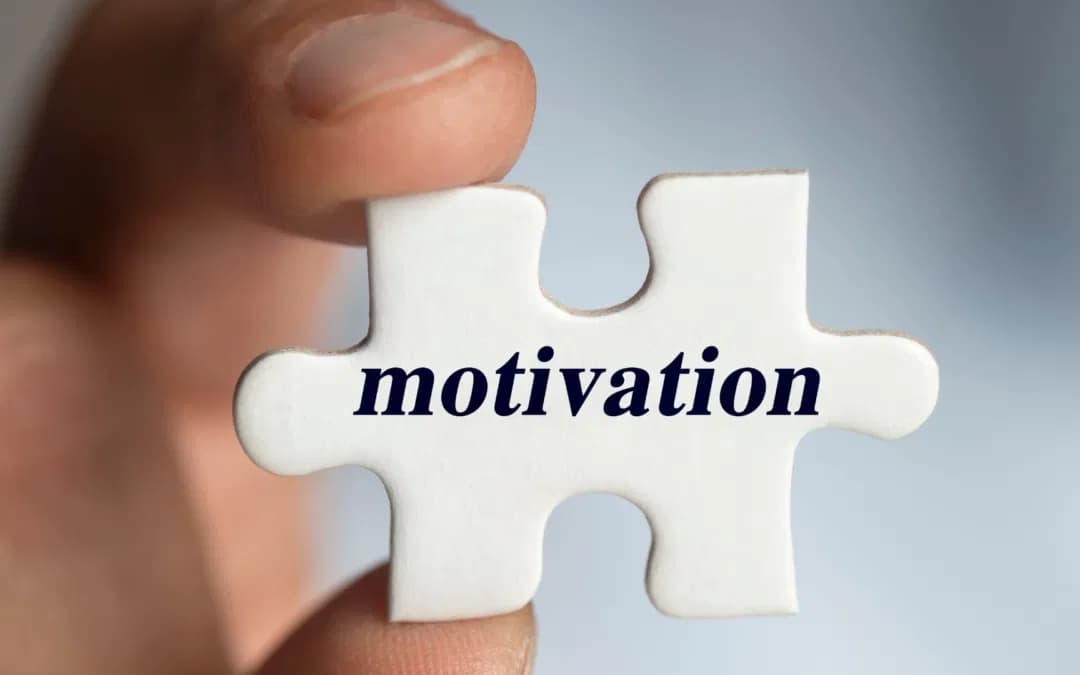
Waiting for motivation to exercise is the reason most people never start. Here's the science of why motivation fails and the practical system that actually gets you moving — even on your worst days.
The Motivation Myth That Keeps You Stuck
The standard advice for starting an exercise habit is to find your motivation — your "why." Write it down. Visualize your goals. Get inspired. The problem with this advice is that it fundamentally misunderstands how motivation works, and why it consistently fails as a behavior-change strategy.
Motivation is a feeling. Like all feelings, it is transient, unpredictable, and heavily influenced by factors outside your control — sleep quality, stress levels, blood glucose, mood, weather. Basing your exercise habit on motivation means your habit is only as reliable as your least motivated day. Which, for most people, means it collapses within two weeks.
The people who exercise consistently — not occasionally, not when they feel like it, but actually consistently for years — are not more motivated than you. They have simply built a system that does not require motivation to activate. This guide is about building that system.
Why Your Brain Resists Starting Exercise
Understanding the neuroscience of resistance makes it easier to overcome. Your brain has two primary systems relevant here: the limbic system (which governs immediate reward-seeking and threat-avoidance) and the prefrontal cortex (which governs long-term planning and self-regulation).
Exercise, especially at the beginning of a new habit, has low immediate reward (it is uncomfortable, effortful, and produces results slowly) and high immediate cost (it requires energy, time, and discomfort). Your limbic system correctly calculates that doing nothing is immediately easier than exercising. The prefrontal cortex knows the long-term value — but it is also the part of the brain that is most impaired by fatigue, stress, and low blood glucose. Which is exactly the state most people are in when they "should" be exercising after work.
This means that trying to override resistance with willpower — a prefrontal function — when willpower is depleted is a structurally losing strategy. The solution is to reduce the decision load so the limbic system does not trigger resistance in the first place.
The Two-Minute Rule: Your Entry Point
The most effective technique for starting exercise when you have no motivation is to reduce the commitment to the point where resistance cannot form. Instead of committing to a 30-minute workout, commit to two minutes of movement. That is it.
Put on your workout clothes. Do two minutes of movement — any movement. Walk to the end of your street. Do ten bodyweight squats. Stretch on the floor.
The neurological reality is that once you begin moving, dopamine and norepinephrine release within two to three minutes, motivation arises from the movement rather than preceding it, and continuing becomes easier than stopping. The research on this is consistent: the hardest part of exercise is starting. Once you are moving, momentum takes over.
The two-minute commitment is not a trick. It is a genuine minimum that respects your current capacity. On some days, two minutes will genuinely be all you do. That is fine. Two minutes of movement is infinitely better than zero, and it keeps the habit alive on your worst days.
Make It Automatic: Habit Stacking
Exercise habits that rely on scheduling and decision-making are fragile. Exercise habits that are attached to existing automatic behaviors are robust. This is the principle of habit stacking: linking a new behavior to an existing anchor behavior so that the anchor triggers the new behavior automatically.
Examples of effective exercise habit stacks:
"After I wake up and drink my morning water, I do 10 minutes of movement before I shower." The shower is already automatic. The exercise is attached to it.
"After I close my laptop at the end of the workday, I put on my workout clothes immediately." The end of the workday is the anchor. Putting on workout clothes is the bridge behavior that activates the session.
"After lunch, I take a 10-minute walk." Lunch is daily and non-negotiable. The walk piggybacks on it.
The key is specificity. "I will exercise more" is not a habit stack. "After I make my morning coffee, I will do 10 minutes of stretching while it brews" is. The more specific the anchor and the new behavior, the stronger the automatic link becomes with repetition.
Remove Every Friction Point
Friction is the enemy of exercise habits. Every additional step between you and starting your workout is a decision point where resistance can form and win. Systematically eliminating friction makes starting require less energy than not starting.
Sleep in your workout clothes or lay them out the night before. This eliminates the morning decision entirely. The clothes are already there. All you have to do is move.
Choose workouts that require no travel. A gym that requires a 20-minute drive adds 40 minutes of friction to every session. A home bodyweight routine requires zero travel. In the early stages of building a habit, convenience beats quality. A consistent home workout outperforms an inconsistent gym program every time.
Keep your workout short enough that it feels achievable. A 15-minute workout you do four times per week is more valuable than a 60-minute workout you do once. As the habit becomes automatic, you can increase duration — but never sacrifice consistency for duration in the early stages.
Choose activities you do not hate. Exercise compliance is dramatically higher for activities people find at least neutral. If you dread running, do not run. Walk. Dance. Swim. Lift weights. Do yoga. The best exercise for building a habit is the one you will actually do.
💪 Ready to apply this to your life?
Take our 2-min quiz and get a personalized workout & nutrition schedule built for your body.
Get My Fitness Plan →Free · No account needed · 2 minutesTrack Streaks, Not Performance
In the early stages of building an exercise habit, what you track shapes your motivation. Tracking performance — pace, weight lifted, calories burned — is discouraging for beginners because progress is slow and inconsistent. Tracking streaks — the simple fact of showing up — is immediately rewarding because you can always show up, even when you perform poorly.
A streak tracker (a simple calendar where you mark each day you moved) provides a daily dopamine reward for showing up regardless of how the session went. It also creates the "don't break the chain" psychology — as the streak grows, the thought of breaking it becomes increasingly aversive. The streak itself becomes a motivator, independent of any performance outcome.
The rule: mark the day as long as you did something. Two minutes of stretching counts. A 10-minute walk counts. The habit is showing up, not performing.
Use the "Minimum Effective Dose" Approach
The minimum effective dose is the smallest amount of exercise that produces the desired benefit. For most people starting from zero, this is far lower than they think. Research consistently shows that even 10–15 minutes of moderate exercise per day produces significant improvements in mood, energy, sleep quality, and cardiovascular health.
Starting with a minimum effective dose has three advantages. First, it is achievable even on your worst days. Second, it consistently delivers the neurochemical reward (mood improvement, energy lift) that builds positive associations with exercise. Third, it creates capacity — your fitness improves, and what felt like effort becomes easy, naturally leading to longer sessions without any conscious push.
Start with 10 minutes per day. Keep it for two weeks. Then increase to 15. Then 20. The progression is driven by the habit becoming enjoyable, not by willpower forcing you to do more.
What to Do on Days You Really Cannot
There will be days when you are genuinely too ill, too exhausted, or too overwhelmed to exercise. These are not failures — they are data about your current capacity. The critical rule: never miss twice in a row.
Missing one day keeps the habit alive. Missing twice begins to establish a new pattern. The moment you return after a missed day — even for two minutes — you preserve the identity of someone who has this habit. That identity is more important than any individual session.
On genuine low-capacity days, downgrade rather than skip. A 5-minute walk is not ideal. It is not nothing. It keeps the chain intact and the neural pathway active.
A Personalized Starting Point
The specific exercise structure that works for you depends on your current fitness level, available time, equipment access, primary goals, and the specific barriers that have stopped you before. A generic "start exercising" plan fails for most people because it does not account for these individual factors.
The Wellness Pure Life fitness quiz generates a personalized workout plan built around your actual situation — your current level, your schedule, your equipment, and your goals. Instead of a generic program that may or may not fit your life, you get a specific structure designed for where you are right now, with progressions that keep you challenged without overwhelming you.
Start today. Two minutes. That is the only requirement.
Was this article helpful?
Keep Reading

The Best Morning Drinks That Boost Your Metabolism Naturally
Read now →
Why Am I Always Tired? The Real Reasons You're Exhausted
Read now →
Why Motivation Does Not Work
Read now →
Evening Routines to Reset Your Nervous System
Read now →
Nutrition for Stress Resilience
Read now →
Why You Cannot Focus Anymore
Read now →Get a Wellness Plan Built Around You
Take our free AI quiz and receive a custom fitness, mindfulness, and nutrition plan tailored to your body, habits, and goals — in under 2 minutes.
No credit card · 2 minutes · 100% free